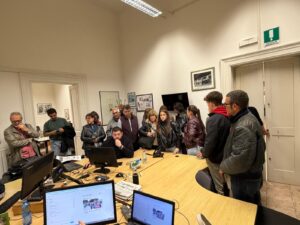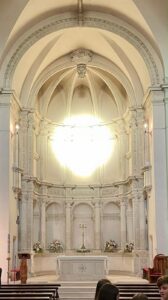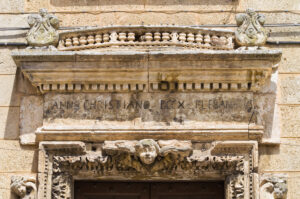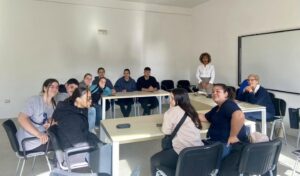



Minervino di Lecce isn’t the kind of place you can grasp right away. It’s a small village, with narrow streets and stone houses that ask nothing of passersby, yet still hold something special. Our association is based here, and every time we take a group of European young people for a walk through the alleyways or up to the Li Scusi dolmen, we see the same expressions: first surprise, then something that looks like recognition.
Where is Minervino di Lecce located and why is it worth visiting?
Minervino di Lecce is located in the province of Lecce, in the lower Salento region, a few kilometers from the Adriatic coast, Otranto and Maglie.
The village has no grand, postcard-worthy monuments. It has something different: a human scale that has become rare today. The squares are small, the churches are simple, and the streets aren’t designed for crowds. Those looking for the crowded Salento of August will have to go elsewhere. Those who want to understand how people used to live—and how they still live—in a town in Southern Italy with ancient roots will find the answer here.
The historic center preserves traces of Lecce Baroque, reinterpreted in the more austere styles typical of inland villages. The local stone defines the colors and textures of every facade. There isn’t a single building to photograph and then leave; rather, there is an entire neighborhood to explore at a leisurely pace.
What is the Li Scusi dolmen, and what does it tell us about this area?
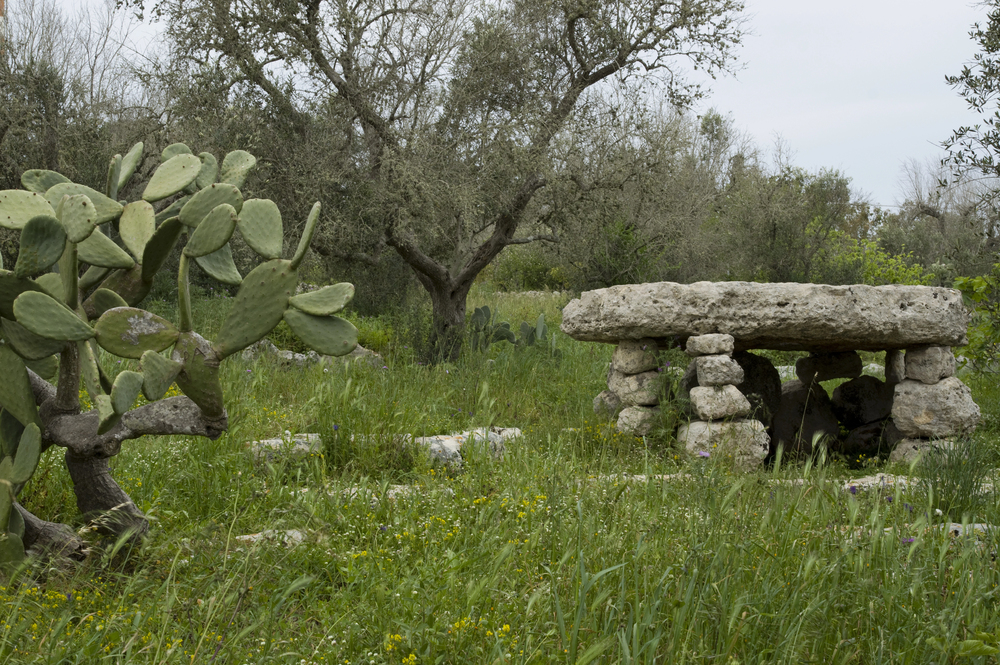
Not far from the town center, nestled among Mediterranean scrub and centuries-old olive trees, lies the Li Scusi dolmen. It is one of the most important megalithic structures in Salento and among the most significant in Southern Italy: a prehistoric construction that predates any written history of this region by millennia.
A dolmen is, in its most basic form, a structure made of vertical stone slabs topped by a large horizontal slab. Li Scusi is striking for the size of its capstone. The exact function of these monuments—whether for burial, ritual, or as a landmark in the landscape—is still being studied, but their very presence speaks volumes: this area was inhabited and socially organized thousands of years ago, and it has preserved traces of that history.
Taking a group of young people to the Li Scusi dolmen is not a tourist activity. It’s a way to place the present within a broader historical perspective. Often, the young people who participate in our projects arrive convinced that “real” history is found in the major European capitals. The dolmen tells a different story: that geographical periphery never coincides with the periphery of history.
Why is our headquarters in Minervino, but the exchange programs take place in Lecce?
Minervino di Lecce is the registered office of our association: it’s the place where we started and to which we remain connected. However, we organize the Erasmus+ mobility programs in Lecce, and this is no coincidence.
A small village has a unique charm for a day of exploration, but for a group staying for weeks, a city offers much more. For those arriving from another country—especially young people—transportation options, opportunities to meet others, and the ability to get around on their own are important. Lecce offers:
- More educational and career opportunities: a greater number of leading companies, schools, and organizations where students can participate in internships, job shadowing, and field trips.
- Public transportation and accessibility, which reduce reliance on private transportation.
- Greater autonomy for students and faculty, who can organize their own schedules and travel arrangements.
- More opportunities to meet people from different backgrounds and cultural contexts.
- A rich cultural offering: museums, libraries, events, monuments, and leisure activities.
Minervino, however, remains part of the itinerary. We return there with the groups on an excursion: the historic center, the countryside, and the dolmen come together to create a day the students will remember for a long time, precisely because it’s so different from the city.
What do those who have been here, even for just a day, take away?
Those who visit Minervino di Lecce, even just for a day trip, rarely take home just a few photos. They take away images, conversations, and flavors. Bread baked in a wood-fired oven, the sunset light on the stone, the silence of the countryside just steps from the center: these are details that seem marginal, yet they remain.
Local traditions—from rustic cuisine to the olive-growing cycle, from patron saint festivals to Salento folk music—are not a show staged for visitors. They are part of everyday life. Immersing yourself in them, even for just a few hours, leaves you with the feeling that you’ve truly been somewhere, not just passed through.
In this sense, the Li Scusi dolmen is a metaphor for the entire region. It has been there for thousands of years; it doesn’t demand attention, nor does it explain itself. But if you stop, if you get closer, if you try to understand it, it reveals a depth you didn’t expect. The heart of Salento works exactly like that.
From here, we walk together: an invitation to talk about it
Minervino di Lecce is our starting point: from here, we work every day on European projects, training, and cultural promotion, and from here, we guide groups as they explore Lecce and the Salento region. We believe that the value of what we do lies in our deep roots in a region we know intimately.
If you’re considering an Erasmus+ experience and want to understand how working with a local organization works, if you’re a school or a European organization looking for a reliable partner in Salento, or if you’re simply curious about what’s going on around here, the best thing you can do is write to us. We can’t promise immediate answers to everything, but we do promise an honest conversation.
You can do this on our Contact page. We started out in a small village, but we’re used to doing big things.
Frequently Asked Questions
Is the Li Scusi dolmen accessible to everyone, even without a guide?
The dolmen is located in a natural area that can be reached on foot or by car without any particular difficulty. You don’t need a guide to visit it, but having someone explain the structure and the surrounding landscape greatly enhances the experience. For up-to-date information on accessibility, it’s best to contact the Municipality of Minervino di Lecce or the local tourist offices.
Where do the Erasmus+ mobility programs organized by Sinodía take place?
In Lecce. The city offers numerous companies, schools, and organizations to collaborate with, public transportation, a wide range of cultural activities, and the opportunity for students and faculty to get around independently. Minervino di Lecce is the association’s registered office and one of the destinations for our local excursions.
What exactly do you do during an Erasmus+ project with Sinodía?
It depends on the type of project: a youth exchange has a different program than a training course or a VET mobility program. In all cases, the educational activities are intertwined with exploring the local area: the Baroque architecture of Lecce, villages like Minervino, the coast, and local traditions. Interacting with people and places is an integral part of the experience, not just a side note.
Do you need to speak Italian to participate?
No. In Erasmus+ projects, the working language is often English, and you don’t need to know Italian to participate. The language barrier may seem like an obstacle, but it almost always turns out to be more manageable than expected—and becomes a learning opportunity in itself.
Can I visit Minervino di Lecce even outside the scope of a European project?
Of course. The village is open year-round, and fall and winter have a particularly authentic charm: fewer visitors, more contact with daily life.
How do I know if Sinodía is the right partner for my project?
The honest answer is: by talking to us. Every project has specific needs depending on the sector, the participants’ ages, and the training objectives, and there’s no one-size-fits-all answer. Writing to us to describe your situation is the first step toward figuring out together whether there’s a real match between what you’re looking for and what we do.