

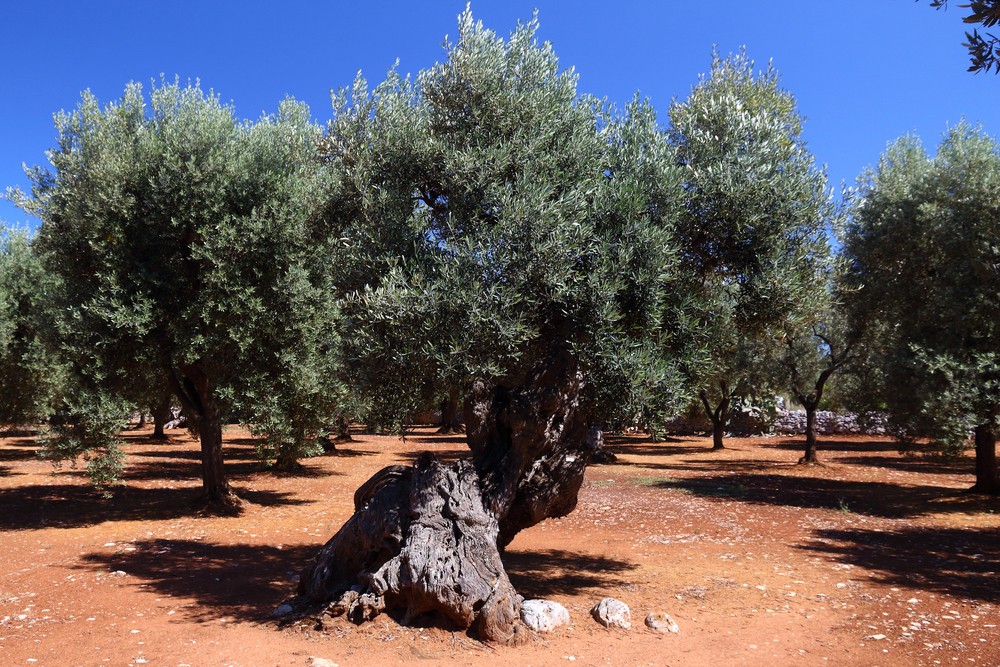
When you think of a Salento farmhouse, you might picture an old stone building, centuries-old olive trees, and a quiet courtyard. That image is true, but incomplete. The farmhouses of Salento are much more than just a place to sleep or eat: they are environments where artisanal, agricultural, and social knowledge—the kind you won’t find in books—continues to be passed down. For those visiting Salento with a group—whether for a European project or to get to know the region up close—a visit to a farmhouse can become one of the most enriching educational experiences of the entire trip.
What makes a masseria different from all the rest?
The masseria wasn’t originally intended as a tourist facility. It was a rural production unit, often self-sufficient, organized around working the land, raising livestock, and processing agricultural products. The architecture itself speaks to a function : underground olive presses carved into the tuff, cisterns to collect rainwater, storage areas for oil and grain, stables arranged to protect the animals from the wind. Each element is a concrete response to a concrete problem.
This kind of practical intelligence, adapted to the landscape and climate, is exactly what makes the farm a powerful educational setting. This isn’t about nostalgia or folklore: it’s about observing how a community solved problems related to water supply, food preservation, and the organization of work in a challenging environment. These are questions that become relevant again every time we discuss sustainability, the circular economy, and the relationship between humans and the environment.
Some farms in the Salento region still maintain functioning facilities: olive mills that visitors can tour and learn about, organic vegetable gardens where work is done by hand, and food-processing workshops open to anyone who wants to learn. This isn’t just for show—it’s a living tradition that continues because it still makes economic and cultural sense.
What do you really learn at a farmhouse?
This question applies equally to a group of young people on an Erasmus+ exchange, a school class, or a single curious traveler. The answer varies depending on the organized experience, but there are certain themes that come up almost every time.
The first theme is food culture. Salento has a culinary tradition deeply rooted in the land: handmade pasta, bread baked in a wood-fired oven, locally produced cheeses, and extra virgin olive oil made from native cultivars such as Ogliarola Salentina and Cellina di Nardò. At the farm, you can witness these processes firsthand, understand the timing involved, and recognize the ingredients in their natural setting. It’s a way of learning that engages all the senses and leaves a lasting impression.
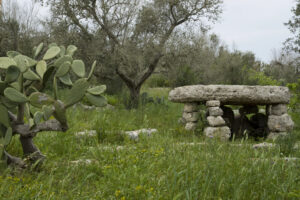
The second area is environmental sustainability. Many farms in Salento operate according to organic or integrated farming practices, manage water resources with great care, and revive dry-stone construction techniques that require neither cement nor energy. Observing these practices in the field sparks a concrete conversation about issues such as resource consumption, waste reduction, and the link between agricultural biodiversity and quality of life. These are central themes in many European projects, and the connection between caring for the local environment and international cooperation is often more direct than it seems.
The third theme is hospitality as a cultural practice. In Salento, welcoming guests warmly is not a business strategy: it is a deeply rooted social code that has to do with respect for the guest, with food as a form of communication, and with the time devoted to conversation. For an international group, sitting down to a meal at a farmhouse and understanding the meaning behind certain gestures, certain dishes, and certain rhythms is, in itself, an act of cultural mediation.
When does it make sense to incorporate a farm visit into an educational program?
Not every farm visit is automatically educational. What makes the difference is the preparation and the context in which the experience takes place. A group that arrives without any questions risks seeing the visit as nothing more than a pleasant stroll. A group that has already worked on certain topics, or that has a framework for reflection to complete after the visit, takes away much more.
For Erasmus+ mobility groups, the farm works particularly well as an activity for exploring the local context. It’s not about sightseeing between workshops—it’s about giving participants direct exposure to the culture of the host community. This type of immersion fosters intercultural conversations, provides concrete material for reflection journals and project documentation, and makes a real contribution to the transferable skills that are later certified, for example through the Youthpass.
For schools and vocational institutions, a visit to a farm can be integrated into curricula covering environmental education, local history, agricultural sciences, and nutrition education. If your school is planning an activity related to the Salento region or is looking for an authentic setting in which to have students explore sustainability issues, a farm is an excellent choice. It’s worth contacting the association or the farm in advance to see what kind of customized activities can be arranged.
For those coming to Salento as trainers or observers as part of a job-shadowing program or training course, the farm offers a vantage point for observing non-formal educational practices that are rarely found in a classroom. Learning by doing, observing, and imitating is at its most natural here.
The Farmhouses of Salento and the Landscape That Encompasses Them
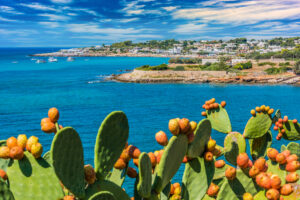
The farmhouses cannot be fully understood if visited in isolation from the surrounding landscape. Salento is a flat, windswept peninsula with limestone soil that absorbs water and releases it through coastal springs. The vegetation is low-growing, adapted to the summer drought. Olive trees, some of which are centuries old, dominate the agricultural landscape in a way that is unparalleled in many other regions of Europe.
To understand the masseria is to understand why it was built where it was built, how it responds to the prevailing wind, how it collected water when there were no aqueducts, and how it produced food in a context where nothing was wasted. This interplay between architecture, agriculture, and the natural environment is one of the most distinctive features of Salento’s culture, and the masserie are the clearest testament to it.
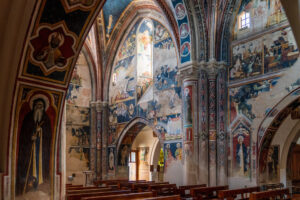
To explore the region that serves as the backdrop for these structures, Salento offers many other points of interest: from historic centers like Galatina, with its extraordinary tradition of medieval frescoes, to the coastlines and the inland villages where Lecce stone is transformed into art. Each place adds a piece to a mosaic that, when viewed as a whole, reveals a surprising coherence.
What to take away from this experience
This Salento farmhouse leaves you with some open-ended questions that, if you let them, continue to linger even after you’ve returned home. How do you pass on knowledge that isn’t written down anywhere? How do you cultivate hospitality without turning it into a commodity? How much of what we now call sustainable innovation was already being practiced here—without a name—simply because it was necessary?
Simply taking these questions home with you is already a learning experience. It doesn’t matter if you’re a young person participating in an international exchange program, a teacher looking for inspiration for your classroom, or an education professional who wants to understand how to work authentically in the community.
If you’re thinking of bringing a group to Salento and want to figure out how to incorporate a visit to a farmhouse into a broader itinerary—whether it’s an Erasmus+ project, a school activity, or a professional training session— please contact us: we can work together to determine what makes sense to plan, based on your goals.
Frequently Asked Questions
Is a visit to the farm also suitable for very young groups, such as middle school students?
It depends on how the activity is structured, not on age alone. Younger students often respond very well to hands-on and sensory experiences: kneading dough, observing the olive press, and picking aromatic herbs. The key is to work with the farm and the group leaders to develop a program tailored to the participants’ expectations and attention span.
Is it possible to organize a visit to a farm as part of an Erasmus+ project and have it count toward the project documentation?
An activity at a farm can be included in the section dedicated to exploring the local context, which is a legitimate part of many Erasmus+ mobility programs. To ensure that it contributes to the documentation and certification of skills, it is helpful to plan it with clear objectives and integrate it with structured reflection sessions before and after the visit.
Are the farmhouses in Salento open year-round or only in the summer?
Many farmhouses that offer agricultural and educational activities are open year-round, because the cycle of the land doesn’t stop in winter. Availability varies by property, so it’s best to check directly and in advance, especially if you have a large group or are looking for a customized activity.
Is a guide or cultural mediator needed to make the visit truly educational?
It’s not mandatory, but it makes a real difference. Someone who can connect what you see to the broader historical, agricultural, and cultural context helps participants go beyond the surface. For international groups, having someone on hand to facilitate linguistic and cultural understanding greatly enhances the value of the experience.
What if the group has special dietary needs, such as allergies or vegetarian diets?
The cuisine of Salento’s farmhouses is traditionally rich in plant-based products: legumes, wild greens, grains, and olive oil. Many accommodations are accustomed to accommodating menu changes upon request. It’s always helpful to communicate the group’s needs in advance so that the farmhouse can plan accordingly without having to improvise.
Is it possible to combine a visit to a farmhouse with other activities in the area on the same day?
Yes, and it’s often the best way to plan an educational day in Salento. A morning at a farmhouse and an afternoon in a historic town center, on the coast, or at a nature site allow you to combine different experiences and gain a more comprehensive understanding of the region. The key is not to overload the schedule and to leave time to process everything.