

Coming back from an Erasmus+ experience is almost always the same: something has changed, but it takes a little time to figure out exactly what. It’s not just the language you used every day, nor the country you got to know. It’s something harder to put into words, but it’s clearly visible in the way you move, speak, and approach new things. The skills an Erasmus+ experience develops aren’t the ones you acquire sitting at a desk, and it’s worth understanding why.
What do you really learn when you step out of your comfort zone?
Your comfort zone isn’t an abstract concept. It’s your routine, your language, your friends, your way of doing things. When you leave your comfort zone and find yourself in a foreign country, with a group of people you don’t know and who come from cultures different from your own, your brain starts working differently.
The first change that many people mention has to do with the ability to fend for yourself without a safety net. Not in the romantic sense of adventure, but in a practical sense: you have to figure out how to use a public transportation system you’re unfamiliar with, how to communicate when words aren’t enough, and how to solve a problem—big or small—without being able to call someone back home to fix it for you.
This independence can’t be taught. It’s acquired by doing it, making mistakes, and adjusting your approach. And that’s exactly what happens during an Erasmus+ mobility program, whether it’s a youth exchange lasting a few days or a longer training period.
Emotional intelligence, flexibility, active listening: Why are they just as important as a resume?
There is a list of skills that companies and organizations look for but that are rarely taught in a structured way in school. They’re called soft skills, transferable skills, or 21st-century skills. Regardless of the labels, these are concrete skills: knowing how to work in a team with people who think differently from you, knowing how to manage frustration when things don’t go as planned, and knowing how to listen before responding.
An Erasmus+ experience creates the ideal conditions for developing exactly these skills. When you work on a project with young people from five different countries, you can’t help but encounter communication styles that differ from your own. Some will be more direct, others more indirect. Some will always arrive on time, while others will have a completely different relationship with time. Learning to navigate these differences without judging them is a skill you take home with you—and one that will serve you well throughout your life.
Emotional intelligence, in particular, grows when you’re forced to deal with new and sometimes uncomfortable situations. Homesickness, the discomfort of not understanding, the satisfaction of having overcome a challenge—these experiences bring you into contact with yourself in a deeper way than daily routine ever does.
A foreign language is just the tip of the iceberg
The first thing many families ask when talking about an Erasmus+ experience is, “Will it improve his or her English?” The answer is almost always yes, but it would be an oversimplification to stop there. Language in a real-world context works completely differently from what is studied in books.
When you use a language to solve a real problem, to make a joke, or to explain how you feel, that language stops being an exercise and becomes a tool. Your language proficiency improves, of course, but above all, your relationship with foreign languages in general changes: your psychological barrier breaks down, you accept that you’ll make mistakes, and you realize that communicating is more important than being perfect.
This is even more true for young people participating in Erasmus+ youth exchanges, where informal communication and group work make language learning feel natural and effortless.
Along with foreign language skills, cultural awareness also grows. Discovering how a group of peers from another country eats, thinks, and celebrates is not just folklore: it is an exercise in open-mindedness that translates into a real ability to work and live in multicultural contexts.
Are these skills visible? How do you convey them to those who weren’t there?
One of the most practical questions young people ask themselves upon returning is: How do I explain what I’ve experienced and learned? How do I include it on a resume? How do I describe it to an employer or a college admissions committee?
Erasmus+ provides tools for the formal recognition of activities carried out during mobility programs. The Youthpass, for example, is a document that describes the skills developed during a youth exchange, written in part by the participant. It is not a report card, but a structured account of the experience, recognized at the European level.
Even those participating in mobility programs as part of vocational training receive documentation of the skills they have acquired. The formal recognition of European experiences is one of the elements that sets Erasmus+ apart from a simple trip abroad: it is not just a personal experience; it is a journey that leaves a lasting impact.
In addition to the documents, however, the ability to express oneself is key. And this, surprisingly, is one of the skills that the Erasmus+ experience develops almost automatically: after going through an intense experience and processing it, many young people become much better at putting into words what they can do and why.
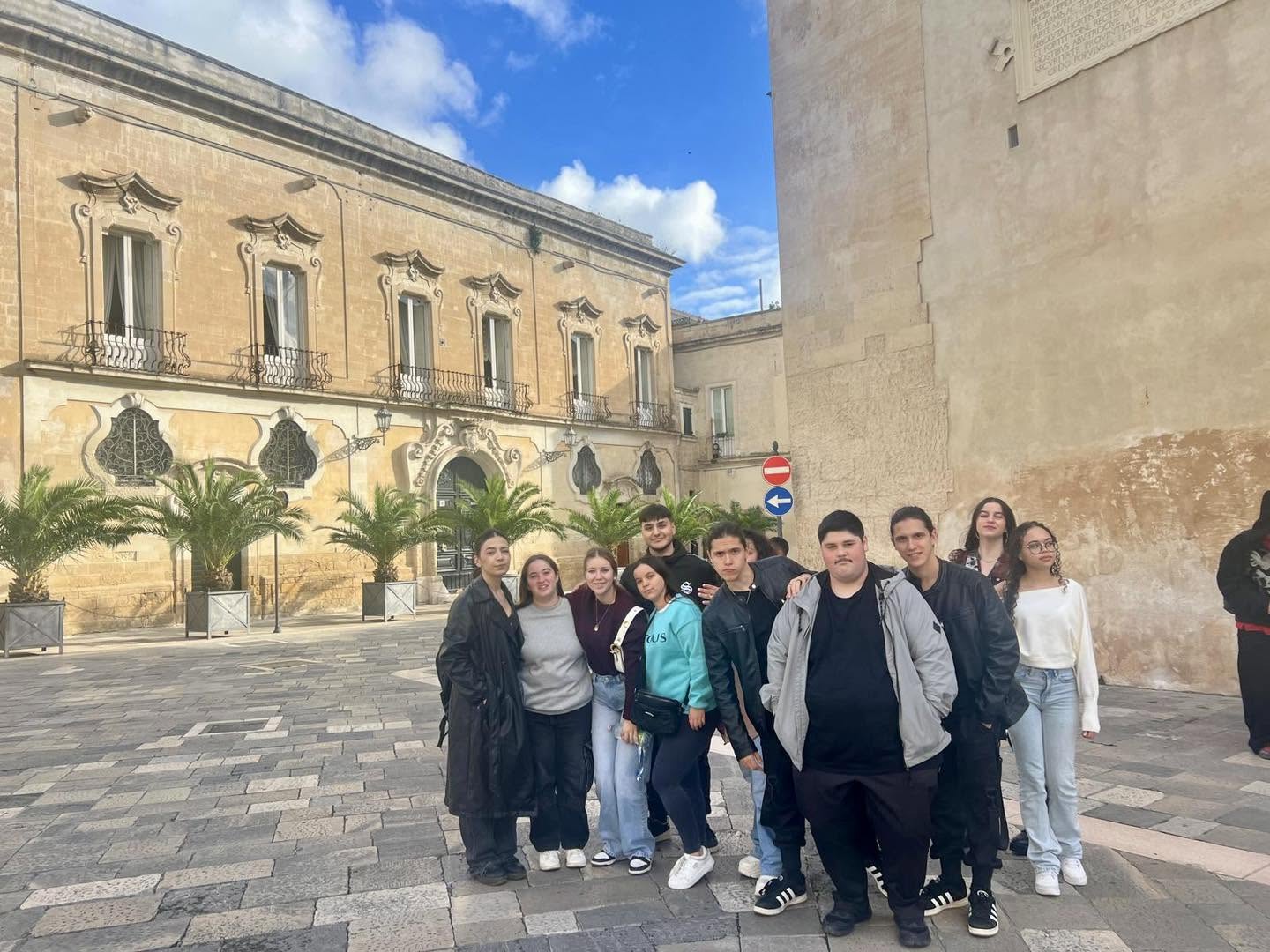
Those who work in the field of vocational education and training know how important this skill is. During a VET mobility program, for example, participants learn to observe work practices in contexts different from their own, adapt to new methodologies, and apply what they’ve seen to their own context. We discussed this by sharing an experience of on-the-job training in Salento that clearly illustrates what it means to learn by doing in a new region.
What do you take home with you, in the end?
Coming back from an Erasmus+ experience doesn’t mean returning exactly as you were when you left. Change isn’t always dramatic or immediate: sometimes it becomes apparent months later, when you find yourself in a new situation and realize you’re handling it differently than you would have before.
What you take home with you is a combination of things that are hard to separate: greater confidence in your own abilities, concrete proof that you’ve overcome a challenge, new friends scattered across Europe, and a broader perspective on how the world works beyond your own country.
It also drives home the realization that learning isn’t just about classrooms and books. That there are contexts in which learning takes place through direct experience, interaction, mistakes, and reflection. And that this kind of learning leaves a deeper and more lasting impression than much of the material studied for an exam.
At Sinodia, we work every day with young people, educators, and organizations that believe in this approach to education. If you’re considering an Erasmus+ experience for yourself or someone you know, or if you’d like to better understand how it works before making a decision, contact us: let’s talk about it at your own pace.
Frequently Asked Questions
Do you need to be good at school to participate in an Erasmus+ experience?
Academic performance is not in itself a requirement for participating in a youth exchange or Erasmus+ mobility program. Selection criteria vary depending on the project and the organization managing it. Generally, motivation, willingness to get involved, and sometimes basic knowledge of the group’s working language are important.
What happens if a student returns earlier than expected?
Situations can vary widely: health issues, personal difficulties, or unexpected family matters. In these cases, the organization managing the exchange program has specific protocols to follow. Before leaving, it’s important to understand the terms of the program and know who to contact in case of difficulties. Asking in advance is always the right choice.
Is the Youthpass recognized outside of Europe?
The Youthpass is a European recognition tool, so it carries the most weight within the EU. Outside of Europe, recognition depends on the context: some universities and employers view it favorably, while others are not familiar with it. In any case, clearly describing the skills you’ve acquired remains useful everywhere, regardless of the formal document.
Can you participate in an Erasmus+ program even if you don’t know the language of the host country?
Almost always, yes. In youth exchanges and training courses, the working language is generally English, not the language of the country hosting the activity. It is not mandatory to speak the local language. A basic knowledge of English helps you participate more actively, but the programs are structured to be accessible even to those with varying levels of proficiency.
Are these skills developed only in long-term programs?
No. Even short experiences, such as a one-week youth exchange, can have a significant impact if they are well-structured. Duration matters, but the intensity of the program, the quality of the group, and the level of active participation matter even more. A short experience that is truly immersive is often more valuable than a long one that is experienced passively.
How can I best prepare myself before leaving?
Learning about the country and the culture of the group you’ll be working with is a good place to start. It’s also helpful to think about what you expect from the experience and what you’re willing to challenge. Organizations that manage exchange programs often offer pre-departure training: actively participating in these sessions makes all the difference.