


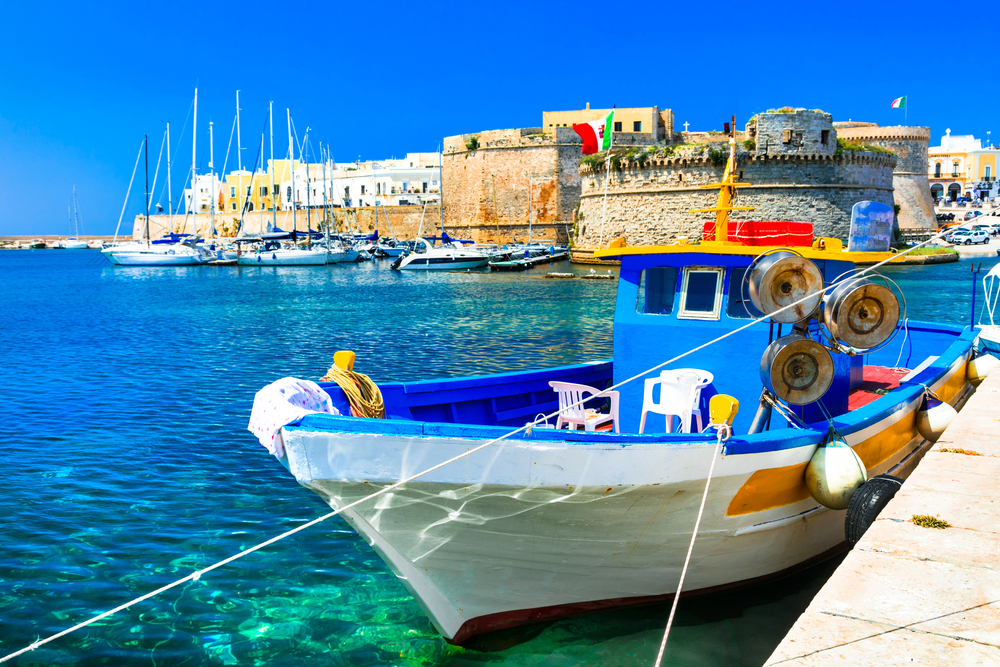
Everyone’s talking about Gallipoli in the summer. In the winter, however, the city returns to its true self: quieter, more authentic, and easier to understand. If you’re thinking of visiting off-season, or if you’ve already been there in August and want to find out what you missed, this article is for you.
What do you find in the old town when there aren’t crowds?
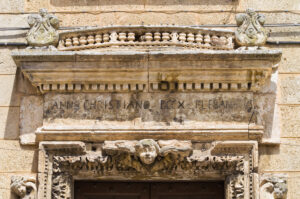
Gallipoli’s old town is a veritable island, connected to the mainland by a 17th-century bridge. Strolling through it on a November or February afternoon means walking along narrow alleys without having to stop every three steps, breathing in the scents that in August are lost in the noise, and gazing up at the baroque facades without anyone bumping into you.
The urban fabric of the old city tells centuries of Mediterranean history in a very direct way: the houses are built close together, the balconies overlook inner courtyards, and the churches open onto unexpected open spaces. You can see all of this best when the tourist crowds thin out and the neighborhood returns to the rhythms of those who actually live there.
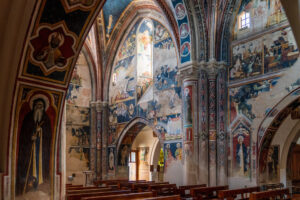
The Cathedral of Sant’Agata, with its facade made of Lecce stone, is one of the most recognizable landmarks in the historic center. Inside, it houses works of art that deserve your attention—not just a quick stop between an ice cream and a photo. In winter, you’ll have time to really take it all in.
The Angevin-Aragonese castle by the sea, which marks the northwestern boundary of the old city, takes on a different appearance in the winter light. The colors of the stone, the water lapping against the walls, the horizon—gray or golden depending on the time of day—are sights that summer, with all its vibrancy, tends to obscure.
The harbor and the fish market: what’s the best time to go?
The harbor of Gallipoli is still an active fishing port today. The boats set out at night and return in the early morning, and the fish market is held along the waterfront in the early hours of the day. It’s one of those places where you immediately realize you’re witnessing something authentic, not a tourist spectacle.
Off-season, the market is even more authentic. The fishermen sell whatever they’ve caught: sea urchins, octopus, anchovies, cuttlefish—whatever the sea has provided. There’s no set menu. You get what’s available, and that’s it. If you want to experience this, get there early: the market won’t wait.
The harbor is worth a stroll just for the atmosphere alone. The nets spread out to dry, the seagulls, the painted boats, the scent of salt and fuel mingling together. It’s not picturesque in the postcard sense: it’s real, alive, a little rough around the edges. And that’s exactly why it’s worth stopping by.
The Sea in Winter in Gallipoli: Why Is It Worth Seeing?
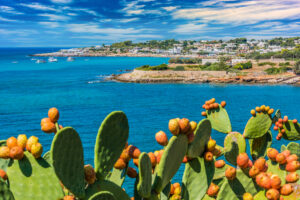
There’s a reason why many people from Salento return to Gallipoli in winter, even if they don’t live there: the sea in the off-season has a completely different character. The winter sea isn’t just a scaled-down version of the summer sea—it’s something else entirely. The waves are higher, the water’s colors shift to deep blue and dark green, and the beaches of Purità and Baia Verde seem almost unreal in their vast emptiness.
Walking along the shore in January isn’t for everyone, of course. It’s cold, the wind can be biting, and there are no beach umbrellas to serve as landmarks. But if you’re the kind of person who finds beauty in the untamed, the Gallipoli coastline in winter will offer you something no summer photo can capture.
Even just sitting on a low wall in the old town and gazing out at the open sea to the west, with the low sun casting an orange glow over everything in the late afternoon, is an experience that needs no adjectives to describe it.
Gallipoli and the Salento Region as the Setting for an Educational Experience
We at Sinodia work in the Salento Region every day, and the area we call home is an integral part of how we welcome the groups that come here for European projects. When young people from other countries participate in an exchange or mobility program in Salento, Gallipoli is almost always included in the itinerary, often during the off-season.
Visiting a place off the beaten path of summer tourism is, in and of itself, an educational experience. It forces you to observe rather than consume, to ask questions rather than settle for what’s already been labeled and explained. A group of young people wandering through the old town of Gallipoli in November, talking to people who work at the port, eating at a trattoria frequented by locals—they’re learning something that isn’t found in school curricula, but that stays with them.
It’s no coincidence that many European educators consider immersion in the host community to be one of the most valuable aspects of an Erasmus+ mobility experience. The skills gained from these experiences are difficult to measure, but easy to recognize over time.
If you’re planning a visit on your own, Gallipoli is perfectly manageable off-season even without a guide: the old town is small, the points of interest are within walking distance, and the atmosphere does most of the work on its own. If, on the other hand, you’re considering a structured group experience in Salento, feel free to contact us to tell us about your project so we can work together to see if and how we can be of assistance.
Frequently Asked Questions
Can you visit Gallipoli year-round, or do many places close in the winter?
The old town, the harbor, and the main churches remain open year-round. Some accommodations and establishments along the waterfront may have reduced hours or close during the colder months, but the historic center remains lively even in the off-season. Before you go, it’s best to check directly on site or contact the establishment you’re interested in.
How do you get to Gallipoli from the rest of Salento without a car?
Gallipoli is connected to Lecce and other towns in Salento by train and bus. Travel times and frequencies vary depending on the season and day of the week, so it’s always best to check the updated schedules on the websites of local public transportation operators before planning your trip.
Is Gallipoli’s old town suitable for small children or people with walking difficulties?
The old town’s alleys are partly cobbled and may have steps or narrow passages. It’s not an impossible route, but it does require some caution. Some areas are difficult to navigate with a stroller or wheelchair, while the main areas around the cathedral and castle are generally easier.
Is it worth swimming in Gallipoli in winter?
The Salento sea is cold in winter and unsuitable for traditional bathing for most people. Some people still choose to swim, but it’s a personal choice that requires preparation. The value of the winter sea in Gallipoli lies primarily in its visual beauty, not in swimming.
What are some must-try dishes in Gallipoli?
Local seafood is the highlight of Gallipoli’s cuisine: octopus, sea urchins, marinated anchovies, and fried fresh fish. Outside of peak season, the trattorias in the historic center tend to offer dishes more rooted in everyday tradition and less geared toward tourist tastes, which is often a plus for those seeking authenticity.
Can I visit Gallipoli as part of an Erasmus+ program or a youth exchange?
Gallipoli fits easily into the local exploration programs that accompany mobility initiatives in the Salento region. It is not an educational destination in the strict sense, but immersion in a vibrant and historically rich urban setting contributes to the non-formal learning that is an integral part of the Erasmus+ experience. It all depends on how the overall program is structured.